Few dental treatments carry a reputation quite like the root canal. Mention you need one, and you’ll probably hear a story from a friend, relative, or co-worker about how unpleasant it supposedly is. Most of those stories come from outdated experiences or misunderstandings about what modern root canal therapy is really like.
At Elgin Dental Group, we understand why the words “root canal” make patients nervous. Our job isn’t just to treat the tooth. We want you to understand what’s happening, why treatment might be necessary, and how we’ll keep you comfortable through it. Modern dentistry has come a long way, and today’s root canal treatment is designed to relieve pain, not cause it.
Myth: Root Canal Therapy Is Extremely Painful
This is probably the biggest of all the root canal therapy myths, and we’re happy to clear it up.
Root canal treatment is typically recommended when the soft tissue inside a tooth, called the pulp, becomes inflamed or infected. It can happen because of deep decay, a crack or injury, or previous dental work, and when the pulp gets badly irritated, the result is often significant pain and sensitivity.
In other words, it’s usually the damaged or infected tooth causing the pain, not the treatment meant to fix it.
Modern local anaesthesia numbs the area thoroughly before we begin. You may feel some pressure or movement during the procedure, but the goal is to keep it comfortable throughout. If you’re anxious, tell us. Knowing how you feel lets us slow down, explain what’s happening, and make the appointment easier.
Another common misconception is that pulling the tooth is easier than root canal therapy. Tooth Extraction is sometimes necessary, but saving a natural tooth is usually the better option when it can be predictably restored, since your own tooth helps maintain normal chewing function and keeps neighbouring teeth from shifting into the gap.
The goal of root canal therapy is simple: clear the infection or inflammation, relieve the discomfort, and give the natural tooth a chance to stay functional.
What Actually Happens During a Modern Root Canal
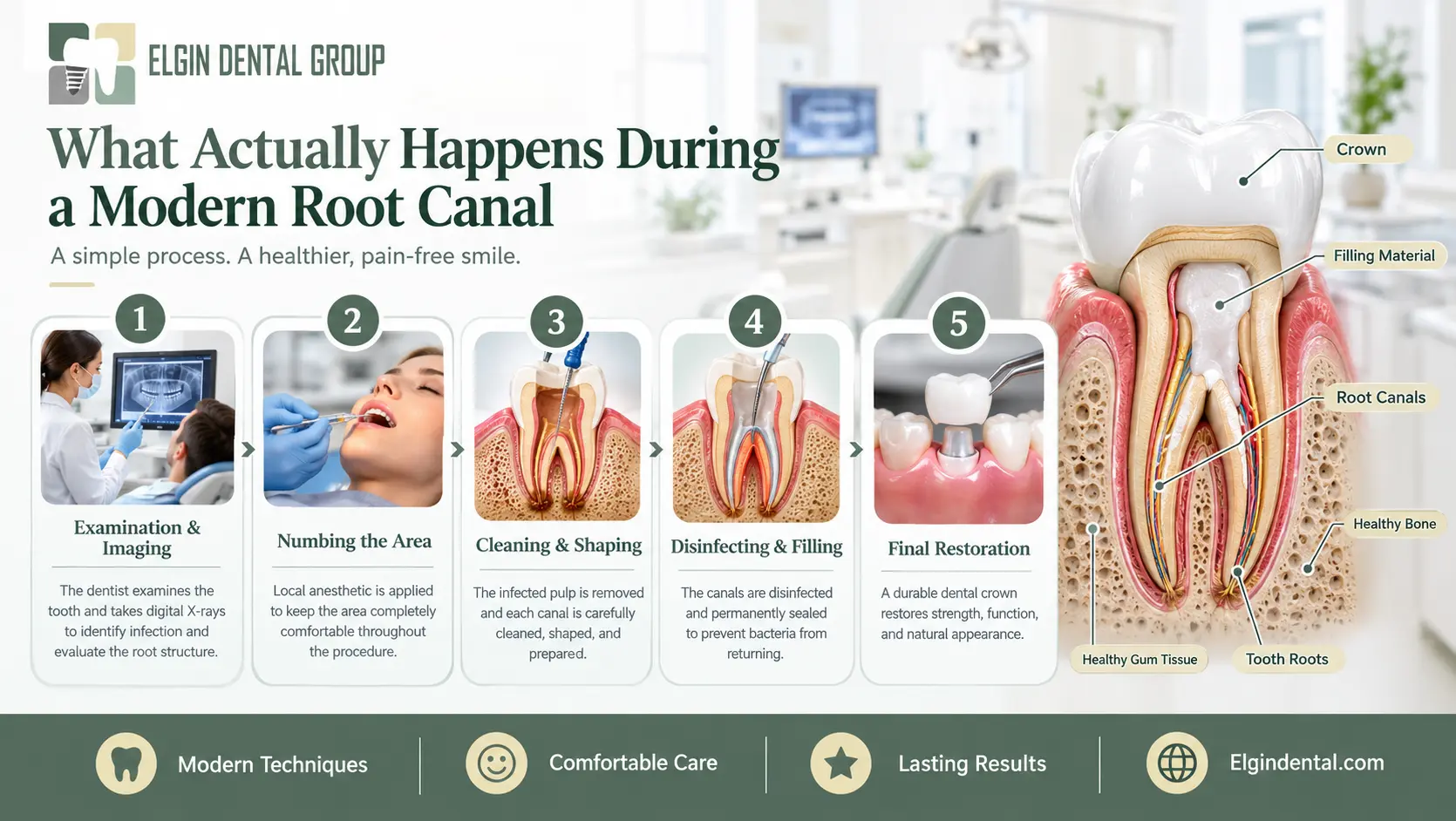
Understanding the procedure takes away a lot of the fear around it.
We start by examining the tooth and taking the dental images needed to see what’s happening beneath the surface. If root canal therapy is recommended, we walk you through our findings and the treatment process before moving forward.
Once the tooth is thoroughly numb, we create a small opening to access the inside of the tooth. The infected or inflamed pulp is carefully removed, and the narrow root canals are cleaned and shaped. The space is then disinfected and filled with a material that seals the canals and reduces the chance of bacteria getting back in.
Depending on the tooth’s condition, treatment may wrap up in one appointment or need additional care, with a temporary restoration placed until the tooth is ready for its final one.
Because a treated tooth can be more prone to fracture, we’ll often recommend a dental crown afterward, especially for back teeth that handle heavy chewing forces. The crown restores strength and protects the remaining tooth structure.
Modern Dental technology has also made diagnosis and treatment planning far more precise than it used to be. Better imaging, instruments, and materials let us work carefully within the small internal spaces of a tooth.
Patients are often surprised by how routine the appointment feels compared with what they’d imagined.
What to Expect After Root Canal Therapy
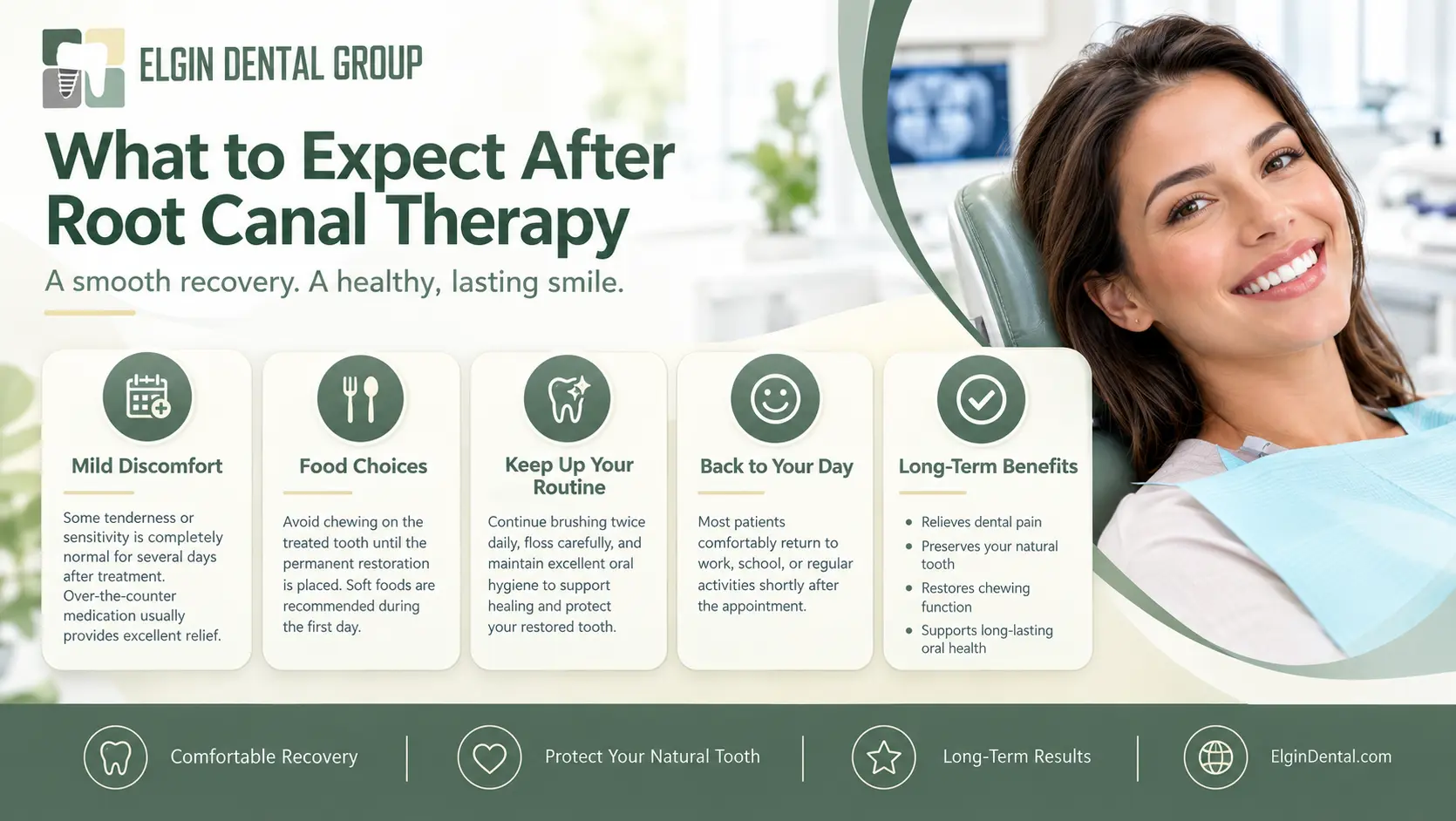
Another myth is that recovery drags on and hurts. Many patients get back to normal activities quickly.
Some tenderness around the tooth is normal for a short period after treatment, especially if there was significant inflammation or infection beforehand, and it should gradually ease as the area heals. We’ll give you instructions for managing any discomfort and caring for the tooth.
Until the final restoration is placed, you may need to avoid particularly hard or sticky foods on that side of your mouth. Once treatment and restoration are complete, the tooth usually functions much like the rest of your teeth.
Good oral hygiene still matters. A root canal doesn’t make a tooth immune to future problems, since decay can still form around a filling or crown, and the surrounding gums still need regular brushing, flossing, and professional care.
Don’t ignore a persistent toothache out of fear that it might mean a root canal. Dental pain rarely gets easier to treat by waiting, and in some cases, an earlier assessment means more treatment options and a better chance of catching an infection before it worsens.
At Elgin Dental Group, we’ve cared for patients in Port Coquitlam and the Tri-Cities for more than 60 years, combining that experience with modern technology and a patient-focused approach to make treatment as comfortable and understandable as possible.
If you’re dealing with persistent tooth pain, sensitivity, swelling, or have been told you might need root canal therapy, contact Elgin Dental Group. We’ll examine the tooth, explain what’s going on, and walk through your options, no scary stories or outdated myths required.
Frequently Asked Questions About Root Canal Therapy
How do I know if I might need a root canal?
Symptoms can include persistent tooth pain, lasting sensitivity to hot or cold, pain when biting, swelling, or changes around the gums. Some teeth that need treatment show few obvious symptoms, which is why a dental exam matters.
Does a root canal hurt more than a filling?
Modern local anaesthesia keeps the area numb throughout treatment. The procedure is more involved than a filling, but most patients find it far more comfortable than they expected.
Why can't I just take antibiotics instead?
Antibiotics can help when an infection has spread, but they don’t remove infected or damaged tissue from inside the tooth. The underlying cause still needs to be assessed and treated.
Will I need a crown after root canal therapy?
Not every case is the same, but crowns are commonly recommended for root canal treated back teeth since they take on significant chewing forces. We’ll recommend whatever restoration best protects your tooth.
How long does a root canal treated tooth last?
With successful treatment, the right final restoration, and good ongoing care, a treated tooth can stay functional for many years. Results vary depending on the tooth’s condition and other factors.
Should I see a dentist right away if I have severe tooth pain?
Yes. Significant or persistent pain should be checked rather than ignored, especially alongside swelling, fever, or other signs of infection. The sooner we know what’s causing it, the sooner we can talk through how to fix it.